
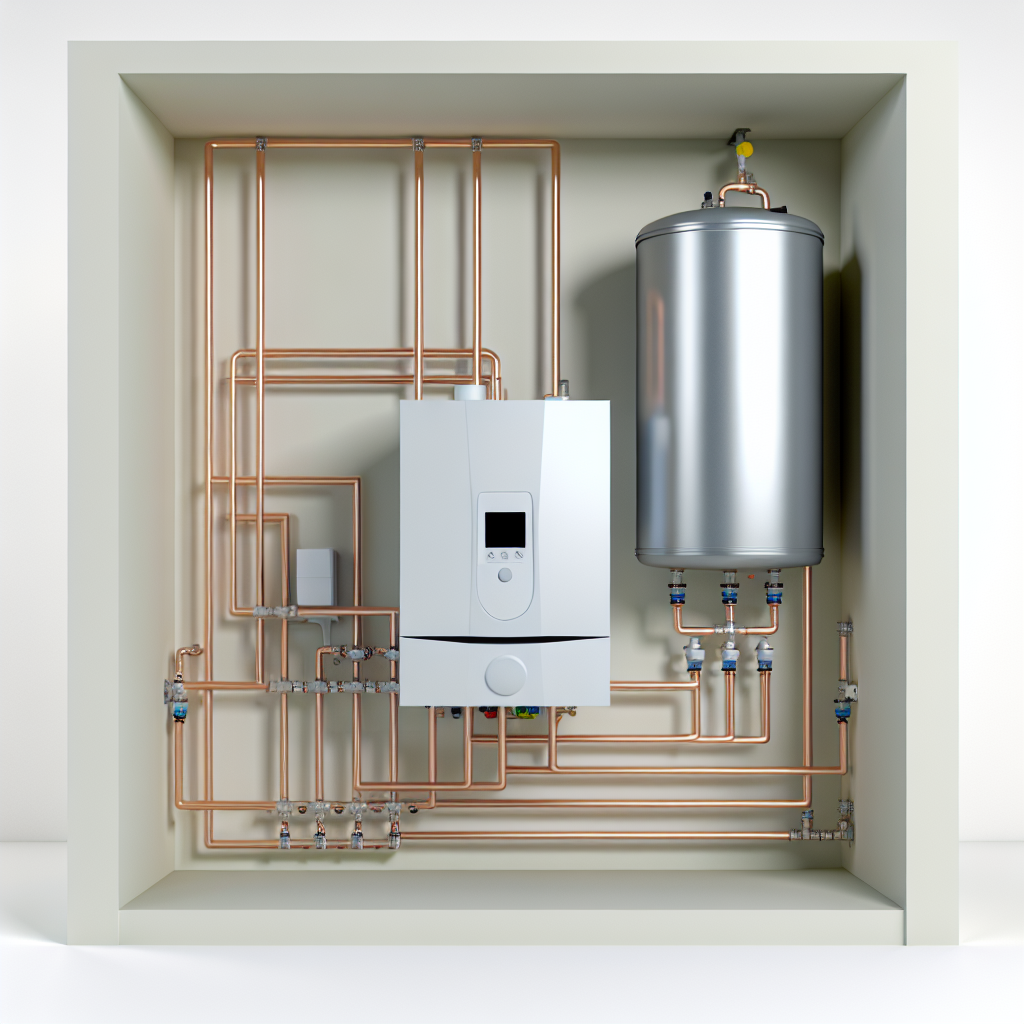
Maximize Performance: Mastering Heat Exchanger Control
In Summary
Heat exchanger control is the process of managing and regulating the flow and temperature of fluid in a heat exchanger system. Its purpose is to maximize heat transfer efficiency and maintain desired temperatures for optimal performance, energy efficiency, and safety.
Understanding Heat Exchangers
When it comes to heating and cooling systems, understanding the basics of heat exchangers is essential. In this section, we will explore what heat exchangers are, how they work, and the different types available.
What is a Heat Exchanger?
A heat exchanger is a device designed to transfer heat between two or more fluids of different temperatures. It can occur through a solid separator or direct fluid contact. Heat exchangers are widely used in various industries for both heating and cooling processes. They can be found in HVAC systems, power plants, chemical processing plants, refrigeration systems, and more .
How Heat Exchangers Work
Heat exchangers operate based on the Zeroth, First, and Second Laws of Thermodynamics, which describe the transfer or “exchange” of heat from one fluid to another. The basic principle involves allowing a fluid of higher temperature to interact with a fluid of a lower temperature. This interaction enables heat transfer, resulting in a decrease in temperature for the hotter fluid and an increase in temperature for the cooler fluid. The heat exchange occurs without the two fluids physically mixing together .
Types of Heat Exchangers
Heat exchangers can be categorized based on their flow configuration and construction method. Flow configuration refers to the direction of fluid flow within the heat exchanger. The main types of flow configurations are:
- Cocurrent Flow (Parallel Flow): The hot and cold fluids flow in the same direction.
- Countercurrent Flow (Antiparallel Flow): The hot and cold fluids flow in opposite directions.
- Crossflow (Perpendicular Flow): The hot and cold fluids flow perpendicular to each other.
- Hybrid Flow: A combination of different flow configurations.
Heat exchangers can also be categorized based on their construction method. The main types of heat exchangers based on construction are:
- Recuperative Heat Exchangers: Each fluid flows through its own channel.
- Regenerative Heat Exchangers: Warmer and cooler fluids flow alternately through the same channel.
- Direct Contact Heat Exchangers: Fluids are not separated and come into direct contact.
- Indirect Contact Heat Exchangers: Fluids are separated by thermally conductive components.
Additionally, heat exchangers can be further classified based on their specific design and components, such as plate heat exchangers, shell and tube heat exchangers, finned tube heat exchangers, double pipe heat exchangers, and air cooled heat exchangers. The specific type of heat exchanger used depends on the application and the heat transfer requirements.
Understanding the fundamentals of heat exchangers, including their working principles and different types, is crucial for optimizing their performance and ensuring efficient heat transfer in various heating and cooling systems.
Heat Exchanger Control Strategies
When it comes to maximizing the performance of your heat exchanger, effective control strategies play a crucial role. Proper heat exchanger control not only ensures efficient heat transfer but also helps optimize energy consumption and reduce operating costs. In this section, we will explore the importance of heat exchanger control, common control strategies, and advanced control techniques.
Importance of Heat Exchanger Control
Implementing effective heat exchanger control strategies is essential for achieving optimal performance. A well-controlled heat exchanger can significantly improve energy efficiency and minimize unnecessary wear and tear on the equipment. By maintaining precise control over the flow rate of the heat transfer fluid and adjusting the temperature difference across the heat exchanger, you can optimize its performance and reduce operating costs .
Common Control Strategies
Several common control strategies can be employed to optimize heat exchanger performance. One widely used approach is Proportional-Integral-Derivative (PID) control, which adjusts the heat transfer fluid flow rate and temperature difference based on the difference between the desired and actual values. This control strategy provides stability and maintains control within acceptable limits. Another common strategy is cascade control, where multiple controllers are linked to control different aspects of the heat exchanger operation. For instance, one controller may regulate the flow rate of the heat transfer fluid, while another adjusts the temperature difference. This hierarchical control structure helps improve control accuracy and stability.
Advanced Control Techniques
In addition to the common control strategies, advanced control techniques can further enhance heat exchanger performance. Model Predictive Control (MPC) is a powerful technique that takes into account process dynamics and constraints to optimize control performance. By using a mathematical model of the heat exchanger system, MPC predicts future behavior and adjusts control actions accordingly . This proactive approach can significantly improve heat exchanger efficiency and reduce variability.
Other advanced control techniques include model-based control and adaptive control. Model-based control utilizes mathematical models of the heat exchanger system to make control decisions, while adaptive control adjusts control parameters based on real-time system observations. These techniques allow for fine-tuning of control strategies and can adapt to changing operating conditions.
With the right control strategies in place, you can optimize the performance of your heat exchanger and achieve efficient heat transfer. Whether you choose common control strategies like PID control and cascade control or advanced techniques like MPC and model-based control, it’s important to consider the specific requirements and dynamics of your heat exchanger system. Consulting with experts in heat exchanger control can help you select and implement the most suitable control strategy for your application.
Challenges in Heat Exchanger Control
When it comes to heat exchanger control, there are several challenges that need to be addressed to ensure optimal performance. Two key challenges are the nonlinear behavior of heat exchangers and the need to implement control strategies to overcome this nonlinearity.
Nonlinear Behavior of Heat Exchangers
Heat exchangers exhibit nonlinear behavior, meaning that the relationship between the input and output variables is not a simple linear relationship. This nonlinearity can make it challenging to control the heat exchange process effectively. The temperature and flow rate of the fluids, as well as the heat transfer coefficient, can vary nonlinearly with changes in operating conditions.
To address this challenge, control engineers employ various control strategies that take into account the nonlinear nature of heat exchangers. One such strategy is cascade control. Cascade control involves using multiple control loops, where the output of one loop (known as the primary loop) becomes the setpoint for another loop (known as the secondary loop). By using cascade control, the impact of nonlinearity can be reduced, and better temperature control can be achieved .
Addressing Nonlinearity with Cascade Control
Cascade control is an effective method for addressing the nonlinearity of heat exchangers. It involves using two or more control loops in series, where the output of the primary loop is used as the setpoint for the secondary loop. The primary loop typically controls the flow rate or the inlet temperature of one of the fluids, while the secondary loop controls the outlet temperature of the other fluid.
By using cascade control, the secondary loop can respond more quickly to changes in the process, as it is not affected by disturbances that directly impact the primary loop. This allows for better temperature control and reduces the impact of nonlinearity on the overall control system. It is important to note that the tuning of the cascade control loops should be carefully optimized to achieve the best performance.
Model Predictive Control for Optimal Performance
Model Predictive Control (MPC) is another advanced control technique that can be applied to optimize heat exchanger control. MPC takes into account process dynamics and constraints to make predictions about future system behavior. By considering multiple variables and constraints, MPC can optimize control performance and achieve optimal heat exchanger operation .
In MPC, a mathematical model of the heat exchanger system is used to predict its behavior over a given time horizon. The control strategy then calculates the optimal control actions to achieve the desired performance while respecting any constraints on variables such as temperature, flow rate, or pressure. By continuously updating the control actions based on the current state of the system and the predicted future behavior, MPC can adapt to changing conditions and optimize the heat exchanger operation.
Implementing model predictive control requires a detailed understanding of the heat exchanger system and the development of an accurate mathematical model. It also requires sophisticated control algorithms and computational resources. However, the benefits of MPC, such as improved performance, reduced energy consumption, and increased efficiency, make it a valuable tool for optimizing heat exchanger control .
By addressing the challenges posed by the nonlinear behavior of heat exchangers through techniques like cascade control and employing advanced control strategies like model predictive control, you can maximize the performance and efficiency of heat exchangers in various applications. These control strategies help ensure that the heat exchange process is optimized, leading to better temperature control, reduced energy consumption, and improved overall system performance.
Optimizing Heat Exchanger Performance
To ensure optimal performance of your heat exchanger, there are several key factors to consider: proper sizing and selection, maintenance and cleaning, and flow distribution and configuration.
Proper Sizing and Selection
Proper sizing and selection of the heat exchanger is crucial to match the heat load and fluid flow rates, minimizing oversizing or undersizing issues . Oversized heat exchangers can lead to higher costs due to excessive material usage and increased pressure drop. On the other hand, undersized heat exchangers may not provide sufficient heat transfer capacity, resulting in poor performance.
When selecting a heat exchanger, consider factors such as the required heat transfer rate, fluid properties, and pressure drop limitations. Consulting with a professional or utilizing heat exchanger sizing tools can help ensure the right size and type of heat exchanger for your specific application.
Maintenance and Cleaning
Proper maintenance and cleaning of heat exchangers are essential for effective control and optimal performance. Over time, fouling can occur on the heat exchanger surfaces, reducing heat transfer efficiency and impeding control performance .
Implementing regular maintenance and cleaning schedules is necessary to prevent fouling and maintain the efficiency of the heat exchanger. Depending on the type of heat exchanger, cleaning methods such as mechanical cleaning, chemical cleaning, or flushing may be required. It is important to follow manufacturer guidelines and recommendations when performing maintenance and cleaning to avoid damage to the heat exchanger.
Flow Distribution and Configuration
Proper flow distribution and configuration within the heat exchanger are crucial to maximize heat transfer efficiency and ensure uniform performance. Uneven flow distribution can lead to hot spots and reduced overall performance .
Consider the flow pattern and direction within the heat exchanger. Counter-flow or crossflow configurations tend to provide better heat transfer performance compared to parallel flow configurations. Additionally, ensure that the distribution of fluid across the heat exchanger is uniform to optimize heat transfer.
By focusing on proper sizing and selection, regular maintenance and cleaning, and optimizing flow distribution and configuration, you can maximize the performance of your heat exchanger. This will result in efficient heat transfer, reduced energy consumption, and improved control of your heating or cooling system. Remember to consult with experts or professionals in the field to ensure you make the best choices for your specific heat exchanger application.
Troubleshooting Heat Exchanger Control Issues
When it comes to heat exchanger control, it’s essential to ensure that all components are functioning properly for optimal performance. In this section, we will explore the key steps involved in troubleshooting heat exchanger control issues. This includes checking sensors and control valves, calibrating and maintaining instrumentation, and utilizing effective troubleshooting techniques.
Checking Sensors and Control Valves
Temperature and flow sensors play a crucial role in monitoring and controlling the operation of a heat exchanger. If you’re experiencing control issues, it’s important to check these sensors to ensure they are functioning correctly. Verify that the sensors are properly installed, securely connected, and free from any physical damage. Additionally, ensure that the sensors are accurately measuring the temperature and flow rates by comparing their readings to known reference values.
Control valves are responsible for regulating the flow of fluids within the heat exchanger. If the control valves are not functioning properly, it can lead to issues such as inadequate heat transfer or flow imbalance. Inspect the control valves for any signs of wear, leakage, or blockages. Ensure that the valves are opening and closing smoothly and responding to control signals appropriately.
Calibrating and Maintaining Instrumentation
Regular calibration and maintenance of the instrumentation and control devices associated with a heat exchanger are vital for accurate and reliable control. Calibration ensures that the sensors and instruments provide accurate readings and responses. Follow the manufacturer’s guidelines for calibration procedures and frequencies.
In addition to calibration, proper maintenance of the instrumentation and control devices is crucial. Regularly inspect and clean the devices to remove any debris or buildup that could affect their performance. Lubricate moving parts as necessary and replace any worn-out components. By keeping the instrumentation in optimal condition, you can enhance the overall control effectiveness of the heat exchanger.
Troubleshooting Tips and Techniques
When troubleshooting heat exchanger control issues, it’s helpful to follow a systematic approach. Start by gathering relevant data and information about the problem, such as control setpoints, operating conditions, and any observed abnormalities. Analyze the data to identify potential causes or patterns that may be contributing to the control issues.
Consider utilizing simulation or modeling tools to simulate the behavior of the heat exchanger and identify potential control improvements. These tools can help evaluate different control strategies and their impact on performance.
If the control issues persist, consult with experts in the field or seek advice from professional control system engineers. They can provide valuable insights and guidance in diagnosing and resolving complex control problems.
By following these troubleshooting steps and techniques, you can effectively identify and address heat exchanger control issues. Regular maintenance, calibration, and thorough troubleshooting help ensure the efficient and reliable operation of your heat exchanger system.
Remember to always refer to the heat exchanger manufacturer’s guidelines and consult with professionals when dealing with complex control issues.
Heat Exchangers in Furnaces
When it comes to furnaces, heat exchangers play a crucial role in ensuring the efficient and safe operation of the heating system. Let’s explore the role of heat exchangers in furnaces, including primary and secondary heat exchangers, as well as the importance of proper sealing and safety measures.
The Role of Heat Exchangers in Furnaces
A heat exchanger in a furnace acts as a barrier between the combustion chamber and the blower, working to dispense heated air from the furnace into your home. It plays a vital role in transferring heat generated by the combustion process to the surrounding air. This process ensures that the air circulated in your home remains warm and comfortable, even during cold weather conditions. By utilizing a heat exchanger, furnaces can efficiently convert fuel energy into heat without directly mixing the combustion gases with the air you breathe .
Primary and Secondary Heat Exchangers
Most efficient furnaces have both a primary and a secondary heat exchanger. The primary heat exchanger is typically located near the burners in the furnace. It is responsible for the initial transfer of heat from the combustion process to the surrounding air. Furnaces equipped with only a primary heat exchanger are typically up to 80% efficient in heating your home .
In high-efficiency furnaces, a secondary heat exchanger is also present. The secondary heat exchanger enhances the furnace’s efficiency by capturing additional heat from the flue gases produced during combustion. This heat is used to further warm the air circulating in your home. The secondary heat exchanger enables these furnaces to achieve efficiency levels of over 90% in heating your home .
Importance of Proper Sealing and Safety
Proper sealing of the heat exchanger is of utmost importance in furnace operation. A well-sealed heat exchanger ensures that there is no leakage of combustion gases, unheated air, or other potentially harmful substances. By preventing the mixing of flue gases with the air you breathe, the heat exchanger helps maintain a safe living environment in your home.
Additionally, a properly sealed heat exchanger allows for efficient heat transfer without any loss. It ensures that the heat generated during the combustion process is effectively transferred to the surrounding air, maximizing the furnace’s energy efficiency.
Regular inspection and maintenance of the heat exchanger are essential to ensure its continued performance and safety. If any signs of damage, cracks, or corrosion are detected, it is important to address them promptly to prevent any safety hazards. Hiring a professional technician for regular maintenance and inspection can help ensure the proper functioning and longevity of the heat exchanger.
In conclusion, heat exchangers play a vital role in furnaces by facilitating the transfer of heat generated during the combustion process to the surrounding air. The primary and secondary heat exchangers work together to provide efficient heating, while proper sealing ensures safety and prevents the mixing of combustion gases. Regular maintenance and inspection are crucial to maintain the performance and safety of the heat exchanger in your furnace.
Optimizing Heat Exchanger Performance
To ensure optimal performance of your heat exchanger, it’s important to consider various factors such as proper sizing and selection, maintenance and cleaning, as well as flow distribution and configuration.
Proper Sizing and Selection
Proper sizing and selection of the heat exchanger is essential to match the heat load and fluid flow rates, minimizing issues related to oversizing or undersizing. Oversized heat exchangers can result in increased costs, while undersized heat exchangers may not provide sufficient heat transfer. By accurately calculating the required heat transfer area and selecting the appropriate heat exchanger type, you can maximize efficiency and performance.
Maintenance and Cleaning
Regular maintenance and cleaning of heat exchangers is crucial for effective control and optimal performance. Fouling, which refers to the accumulation of deposits on the heat exchanger surfaces, can significantly impact heat transfer efficiency. Implementing regular maintenance and cleaning schedules is necessary to prevent fouling and ensure proper heat exchange. For more information on heat exchanger cleaning, visit our article on heat exchanger cleaning.
Flow Distribution and Configuration
Proper flow distribution within the heat exchanger is vital to maximize heat transfer efficiency and prevent hot spots or reduced performance. Ensuring uniform flow distribution across the heat exchange surfaces helps to optimize heat transfer. Additionally, the configuration of the heat exchanger, such as counter-flow or crossflow arrangements, can impact heat transfer performance. Generally, counter-flow or crossflow configurations tend to provide better heat transfer performance compared to parallel flow.
By paying attention to these factors, you can maximize the performance and efficiency of your heat exchanger. Proper sizing and selection, along with regular maintenance and cleaning, will help to maintain optimal heat transfer. Additionally, ensuring proper flow distribution and configuration will prevent any potential issues and ensure the longevity of your heat exchanger.
For further information on heat exchangers, including different types, materials, and applications, visit our comprehensive guide on heat exchangers.